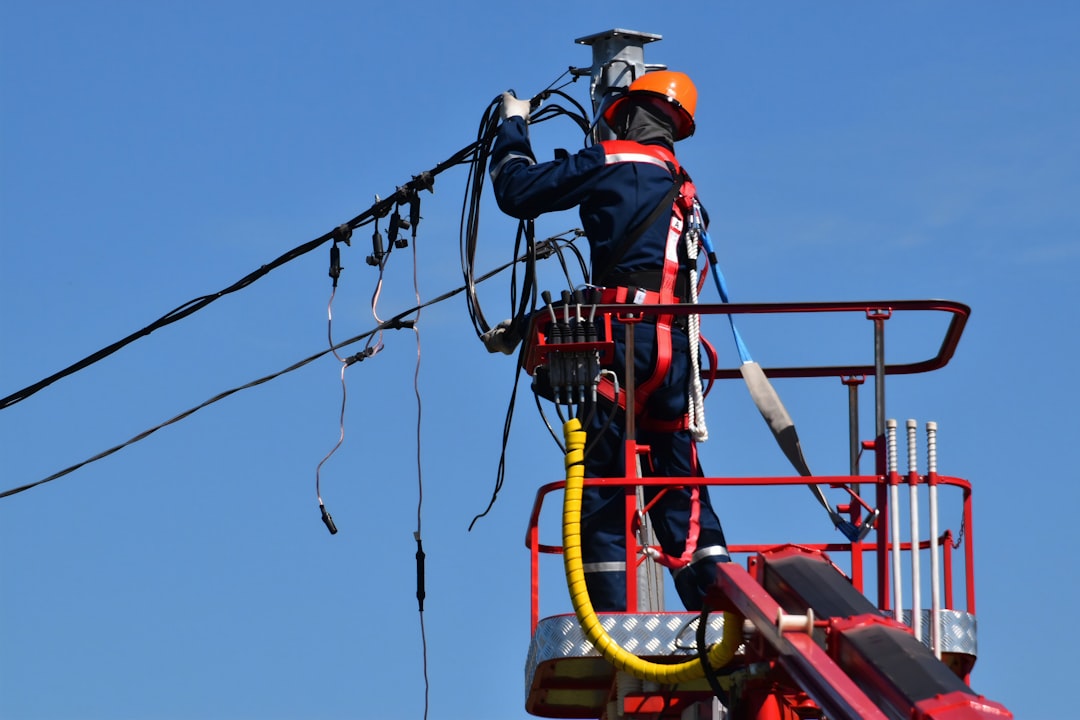
We approach the complex field of electrical fault finding in Brisbane with a methodical and analytical perspective, underscoring the necessity for robust understanding and practical application. Brisbane’s specific environmental factors, such as its subtropical climate and associated infrastructure challenges, necessitate a tailored approach to diagnostics and repair. Our aim here is to elucidate the principles and methodologies that underpin effective fault identification, fostering precision and efficiency in addressing electrical anomalies.
Understanding Basic Electrical Principles
Before we can effectively troubleshoot, we must first establish a firm grasp of fundamental electrical principles. This includes Ohm’s Law (V=IR), Kirchhoff’s Laws (current and voltage), and the concepts of resistance, capacitance, and inductance. We consider these not as abstract scientific concepts, but as the governing rules of the very systems we aim to diagnose. A circuit’s behaviour under fault conditions is often a deviation from these established norms. For instance, a short circuit presents as an abnormally low resistance, causing a corresponding surge in current, which we identify through our instrumentation.
The Role of Circuit Diagrams and Schematics
Circuit diagrams are our maps in the often-invisible landscape of electrical systems. They provide a visual representation of component connections, wire pathways, and device ratings. Without an accurate schematic, our diagnostic efforts become largely exploratory, akin to navigating a labyrinth without a blueprint. We emphasize the importance of current and accurate diagrams, especially given that modifications and upgrades over time can render original documentation obsolete. A discrepancy between the schematic and the physical reality is itself a form of ‘fault’ that can hinder diagnosis.
Safety Protocols: Our Paramount Concern
Electrical work inherently carries risks, and fault finding can expose us to unexpected hazards. Our safety protocols are not mere bureaucratic formalities; they are critical safeguards against injury and fatality. We rigorously adhere to lockout/tagout procedures, ensuring de-energization before commencing work. Personal Protective Equipment (PPE) – insulated gloves, safety glasses, and arc-flash protection – is mandatory. We also advocate for the use of non-contact voltage detectors as a preliminary safety check, providing an initial assessment without direct contact. These measures are the bedrock upon which all subsequent diagnostic work is built.
Diagnostic Tools and Their Applications
Multimeters: The Versatile Workhorse
The digital multimeter (DMM) is our primary diagnostic instrument. We utilize it for measuring voltage (AC/DC), current (AC/DC), and resistance. For discerning open circuits, we employ the continuity test function. When faced with intermittent faults, the DMM’s data logging capabilities become invaluable, allowing us to capture transient events that might otherwise evade detection. We also leverage advanced DMM features, such as frequency measurement for AC systems and capacitance testing for components like motor starting capacitors. Understanding the limitations of a DMM, such as its input impedance influence on certain measurements, is also critical.
Clamp Meters: Non-Intrusive Current Measurement
For measuring current without breaking the circuit, we rely on clamp meters. These devices use the principle of electromagnetism to detect the magnetic field generated by current flow, providing a non-intrusive method for measuring up to hundreds of amperes. This is particularly useful in live systems where interrupting the power would be undesirable or impractical. We use clamp meters to balance loads, identify overloaded circuits, or confirm current draw against specifications, which often leads to the identification of fault conditions such as motor overcurrent due to mechanical binding.
Insulation Resistance Testers (Meggers): Identifying Insulation Breakdown
Insulation integrity is fundamental to the reliable operation of electrical systems. Over time, insulation can degrade due due to heat, moisture, or mechanical stress, leading to leakage currents or short circuits. Insulation resistance testers, or ‘meggers,’ apply a high DC voltage to a circuit and measure the resulting leakage current, providing quantitative data on insulation health. A reading below manufacturer specifications often indicates impending or current insulation failure, a common fault in Brisbane’s humid environment, which exacerbates insulation degradation. We use these extensively for motors, transformers, and cabling.
Thermal Imagers: Visualising Heat Signatures
Overheating is a precursor or symptom of numerous electrical faults, including loose connections, overloaded circuits, or failing components. Thermal imagers allow us to visualize infrared radiation emitted by electrical components, translating it into a thermal image where warmer areas are highlighted. This non-contact, rapid assessment tool can detect elevated temperatures on switchgear, circuit breakers, busbar connections, and motor windings, often before a catastrophic failure occurs. We employ them in preventative maintenance routines as well as during active fault finding, as they offer early identification of potential failure points without system disruption.
Systematic Approaches to Fault Finding
The “Half-Split” Method
When isolating a fault within a lengthy circuit or complex system, the “half-split” method is often our preferred strategy. We begin by dividing the circuit into two halves and testing the midpoint. If the fault is in the first half, we then bisect that section again, and so on. This iterative process allows us to rapidly narrow down the fault location with a minimum number of tests, significantly reducing troubleshooting time. We apply this method to both logical and physical divisions of circuitry, including control panels and distribution networks.
The Input-to-Output Flow Analysis
For sequential control circuits or power distribution paths, we typically adopt an input-to-output flow analysis. We start at the power source (input) and systematically test each component in the operational sequence, moving towards the load (output). This method helps identify where the power or signal chain is interrupted. For example, in a motor control circuit, we would verify power at the main breaker, then the contactor, then overload relays, and finally at the motor terminals. The point at which the expected voltage or current is absent or abnormal indicates the fault’s immediate vicinity.
The Output-to-Input Backtracking Method
Conversely, for faults that manifest at the load, we sometimes employ an output-to-input backtracking method. Beginning at the symptom (e.g., a non-functional motor), we work backward along the circuit path towards the power source. This is particularly useful when the fault is evident at the end device. For instance, if a light fixture is not working, we would first check its bulb, then the fixture’s internal wiring, followed by the switch, and finally the circuit breaker, thus tracing the path of potential interruption.
The “Cause and Effect” Matrix
In systems with multiple interdependencies, we often construct a “cause and effect” matrix. This involves listing all possible symptoms (effects) and correlating them with potential underlying causes. This systematic approach, often built upon experience and historical data for similar systems, allows us to rapidly prioritize diagnostic steps. For example, if a motor hums but doesn’t turn, our matrix might point to a single-phasing condition, a locked rotor, or a faulty capacitor, each requiring a distinct diagnostic sequence. This method formalizes the diagnostic decision-making process.
Common Electrical Faults in Brisbane’s Environment

Wiring and Cable Faults
Given Brisbane’s climate, characterized by high temperatures and humidity, wiring and cable faults are prevalent. Deterioration of insulation due to UV exposure, heat, and moisture can lead to short circuits, open circuits, or ground faults. We frequently encounter brittle insulation, especially in older installations, increasing the risk of conductor exposure. Rodent damage to cables is also a recurring issue, leading to intermittent or complete circuit breaks. Our fault-finding process for cables often involves visual inspection, insulation resistance testing, and continuity checks.
Component Failures
Electrical components, such as circuit breakers, contactors, relays, and starters, are subject to wear and tear. Over time, mechanical fatigue, arc damage, or overheating can lead to their failure. We meticulously inspect components for signs of physical damage, burning, or discoloration. Testing involves checking coil resistance, contact continuity, and mechanical operation. Capacitors, common in motor circuits, are prone to degradation and can lead to unbalanced currents or starting issues, requiring capacitance measurement and often replacement.
Ground Faults and Earth Leakage
Ground faults occur when current deviates from its intended path and flows to the earth, often through damaged insulation or accidental contact. This can pose severe shock hazards and lead to equipment damage. In Brisbane, the presence of moisture can exacerbate these issues. We use Earth Leakage Circuit Breakers (ELCBs) and Residual Current Devices (RCDs) for protection, but when these trip, locating the specific ground fault requires systematic isolation of circuits and insulation resistance testing. The challenge often lies in distinguishing a true fault from nuisance tripping.
Overloads and Short Circuits
| Metric | Details |
|---|---|
| Average Response Time | 2-4 hours |
| Common Fault Types | Short circuits, Overloaded circuits, Faulty wiring, Tripped breakers |
| Typical Service Duration | 1-3 hours per fault |
| Service Availability | 24/7 emergency services |
| Average Cost Range | Varies based on fault complexity |
| Common Tools Used | Multimeter, Insulation resistance tester, Circuit tracer |
| Customer Satisfaction Rate | Approximately 90% |
| Licensing Requirements | Licensed electrician required |
Overloads occur when a circuit draws more current than its design capacity, leading to overheating and potential fire hazards. Short circuits, characterized by an abnormally low resistance path, result in extremely high currents that often trip protective devices. Identifying the source of an overload involves measuring current draw and comparing it to circuit ratings. Pinpointing short circuits typically involves continuity testing or insulation resistance checks after isolating sections of the circuit. The characteristic burning smell or visual evidence of arcing often provides initial clues.
Advanced Techniques and Preventative Measures
Power Quality Analysis
Beyond basic fault finding, we engage in power quality analysis to identify subtle but persistent issues that can lead to equipment malfunction or premature failure. This involves monitoring voltage sags, swells, transients, harmonics, and flicker. In a city like Brisbane, with its mix of residential, commercial, and industrial loads, power quality can be variable. We use specialized power quality analyzers that log data over extended periods, allowing us to correlate anomalous electrical events with specific operational issues. Corrective actions might involve harmonic filters, surge suppressors, or voltage regulators.
Predictive Maintenance Strategies
Our approach extends beyond reactive fault finding to proactive predictive maintenance. This entails utilizing diagnostic tools on a routine basis to anticipate potential failures before they occur. Thermal imaging surveys, insulation resistance testing, and vibration analysis (for rotating machinery) are examples of techniques we integrate into our maintenance schedules. By tracking trends in these measurements, we can predict component lifespan and schedule replacements or repairs during planned downtime, minimizing costly unscheduled outages. This shifts our paradigm from fixing failures to preventing them.
Data Logging and Trend Analysis
Modern electrical faults, especially intermittent ones, often require the capturing and analysis of data over time to be properly understood. We extensively use data logging capabilities of our multimeters and power quality analyzers. By collecting voltage, current, temperature, and other parameters over hours or days, we can identify patterns, correlations, and transient events that are otherwise undetectable. Trend analysis of this logged data allows us to predict maintenance needs, assess equipment degradation, and understand the cyclical nature of certain faults caused by load variations or environmental factors. This data-driven approach enhances our diagnostic accuracy and efficiency significantly.
Conclusion: Our Commitment to Precision and Safety
Mastering electrical fault finding in Brisbane is an ongoing process of learning, adaptation, and meticulous application of established principles. We understand that each fault presents a unique challenge, often demanding a blend of technical expertise, systematic problem-solving, and adherence to stringent safety protocols. Our commitment remains focused on delivering precise diagnostics and effective solutions, ensuring the reliability and safety of electrical systems for our clients throughout the Brisbane metropolitan area.